
Best Anti Slip Stair Tiles for Safer Steps

A staircase can look perfectly finished and still be unsafe where it matters most: on the leading edge of each tread. The best anti slip stair tiles combine a suitable surface texture with accurate cutting, secure adhesion and a clear visual distinction between tread and riser. Choosing tiles on appearance alone is how many stair projects go wrong.
For a home, rental property or garden access route, the right specification depends on whether the steps are indoors, exposed to rain, regularly used in wet footwear, or likely to be used barefoot. The tile itself matters, but so do the nosings, grout joints, drainage and condition of the steps underneath.
What makes the best anti slip stair tiles?
Anti-slip performance is not simply about choosing the roughest tile available. A heavily textured surface may offer more grip outside, but can be uncomfortable underfoot, difficult to clean and unsuitable for a refined internal staircase. The best choice balances traction with the way the staircase is actually used.
For most domestic staircases, porcelain is the practical starting point. It is hard-wearing, stable, low-absorption and available in many stone, concrete and timber-look finishes. A matt or structured porcelain surface generally provides better grip than polished porcelain, particularly when people are wearing socks, slippers or damp shoes.
Avoid glossy wall tiles and highly polished floor tiles on steps. They may look clean in a showroom, but their surface can become slippery under water or household cleaning products. A smooth tile can also make it harder to see the edge of each tread, especially in low light.
Slip ratings can help, but they should not be read in isolation. R ratings are commonly used to indicate surface grip, with higher numbers generally representing a more textured finish. They are useful for comparison, particularly for external areas, but do not replace an assessment of the location. Pendulum test values may also be supplied for some tiles. These measurements depend on testing conditions, so it is sensible to discuss the intended use with a tiling specialist rather than select a product on a rating alone.
Indoor staircase tiles: grip without an overly harsh finish
Internal tiled stairs need to work with everyday living. Hallway steps may receive mud, rainwater and grit, while stairs between floors are often used in socks. A matt porcelain tile with a subtle grain, stone texture or fine structured finish is usually the most balanced option.
Large-format tiles can give a modern, uninterrupted look, but they need planning. Each tread should ideally be formed from a single piece where possible, avoiding unnecessary joints across the walking line. The size of the stair, tile layout and available tile trims will determine whether this is realistic. On narrow or winding stairs, a smaller format can reduce awkward cuts and create a neater result.
Colour contrast is equally useful. A pale tread with a slightly darker riser, or a discreet contrasting strip at the front edge, makes each step easier to read. This is particularly worthwhile in entrance halls, basement stairs and homes where lighting levels vary. The contrast does not need to interrupt the design. It can be achieved with a matching stair nosing, a slim mosaic detail or a different shade from the same tile range.
Natural stone can also be used internally, but it requires a more careful specification. Honed stone is often safer than polished stone, although sealing and ongoing maintenance are required. Some stones can darken, stain or wear unevenly on high-traffic stairs. Porcelain is normally the lower-maintenance option where a stone appearance is wanted.
Exterior steps need a different specification
Garden terraces, front entrances and side access steps face more demanding conditions. Rain, frost, algae, leaf debris and soil can all reduce grip. For these areas, choose an outdoor-rated porcelain tile with a textured finish and low water absorption. Exterior porcelain is well suited to the UK climate when it is installed correctly on a sound, properly prepared base.
A tile that is suitable around a pool or on a terrace can be a strong option for external stairs, but check the product is appropriate for the specific setting. The more exposed the location, the more important surface texture and drainage become. Very rough finishes provide useful grip, yet can hold dirt and become harder to wash down. A well-designed structured porcelain tile is often a better long-term answer than an aggressively rough surface.
External stair treads should fall slightly forward so water does not sit on the surface. Standing water is a slip risk and can lead to staining, algae growth or frost damage over time. The riser and tread joints must be properly finished, while movement joints should be included where the construction and tile area require them. These details are not decorative extras. They protect the tiled finish from movement and weather exposure.
Dark tiles can look smart outside, but they may show pale dust and dried water marks. Very light textured tiles can show soil. Mid-toned greys, warm stone shades and patterned porcelain often give a more forgiving finish on busy external steps.
Stair nosings are part of the safety system
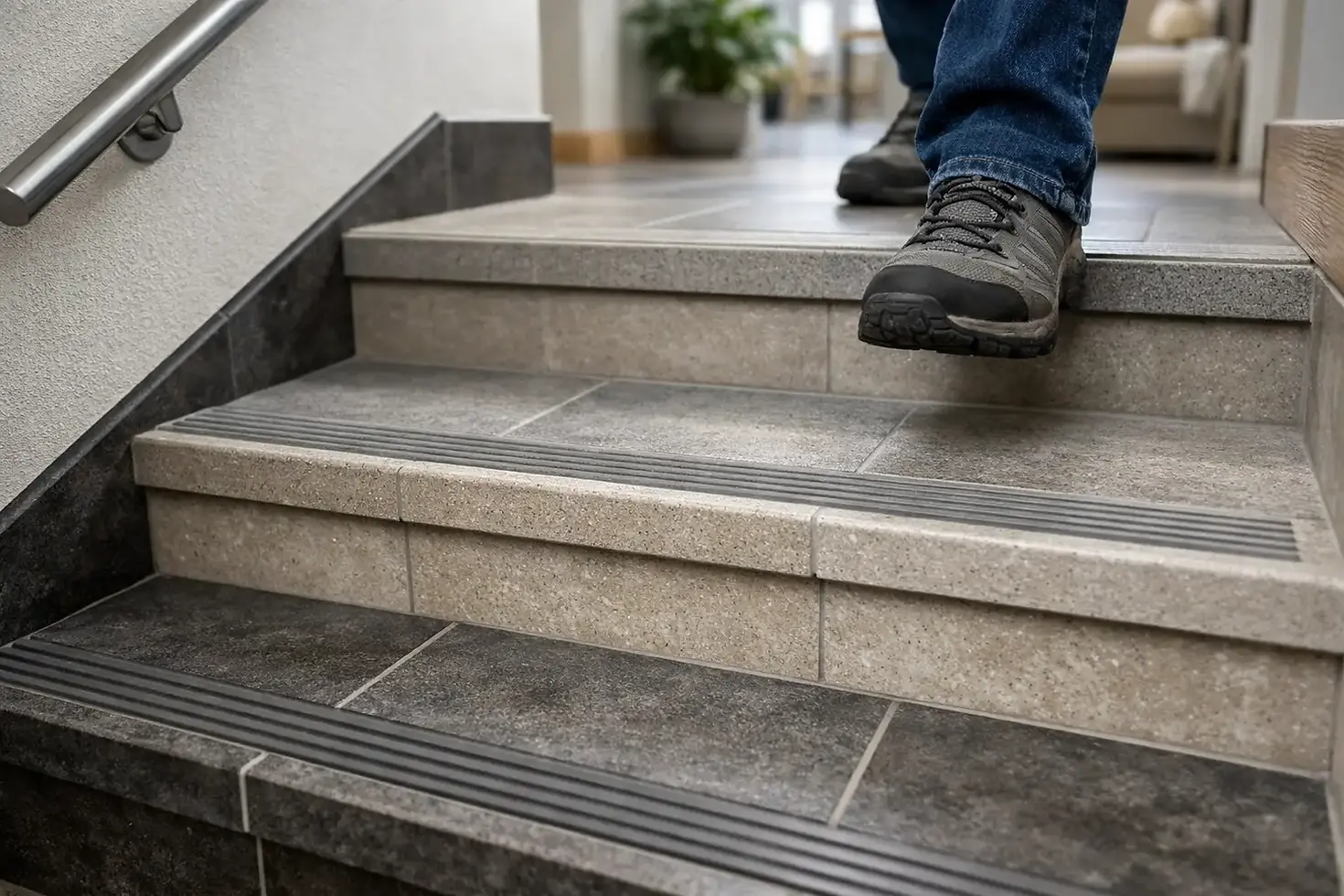
The front edge of a step takes the most impact and is where slips, trips and chipped tiles are most likely. A purpose-made stair nosing protects this vulnerable point and helps define the edge of each tread. It should be selected before installation, not added as an afterthought.
Metal trims can provide a clean contemporary line and are available in finishes that suit modern interiors. Tile-in porcelain nosings create a more continuous look, while grooved or ribbed profiles can add further grip. For a traditional property, a carefully formed tiled edge may be preferred, but it needs enough protection to withstand repeated use.
The right profile depends on the tile thickness, stair construction and look required. A trim that sits too proud can become a trip point. One that is too slight may offer little edge protection. Accurate setting-out is what makes the nosing look intentional rather than fitted around a problem.
Do not overlook grout, lighting and cleaning
Grout joints can contribute to grip, but they should not be relied on to compensate for a slippery tile. On exterior steps, joints need to be fully packed and specified for weather exposure. Internally, choose a grout colour that supports the design without making every joint look dirty after a few weeks of use.
Lighting has a direct effect on stair safety. Wall lights, step lights or good overhead lighting make tread edges visible, particularly near entrances and garden routes. If a dark tile is being considered for an enclosed staircase, check how it reads in the actual light before committing to the full installation.
Cleaning products matter too. Soap residue, polish and some general-purpose cleaners can leave a film that reduces grip. A regular clean with a suitable non-film-forming cleaner and a stiff brush for textured external tiles is usually enough. The aim is to keep the surface clear, not to coat it with products that change its performance.
Why fitting quality matters as much as tile choice
Even excellent anti-slip porcelain can fail if the substrate is uneven, damp, cracked or poorly prepared. Stair tiles need full, consistent support beneath them. Hollow spots, weak adhesive coverage and unsupported tile edges can lead to cracks or movement at the nosing.
Before tiling begins, the dimensions of every tread and riser should be checked. Older properties often have variations that are not obvious until work starts. The installer must set out the tile pattern to keep the finished steps consistent, avoid thin slivers at exposed edges and ensure the stair profile remains comfortable to use.
On external work, preparation may include correcting falls, waterproofing where required and choosing a fixing system suited to the background and weather conditions. On internal stairs, the construction may be timber, concrete or existing masonry, each needing a different approach. Covering a problem substrate without resolving it first is false economy.
For staircases in Romford, East London, Essex, Kent and surrounding areas, GMSUK Tiling Expert LTD can assess the existing steps, intended use and finish required before recommending a practical tile and edge detail.
A good staircase tile scheme should feel secure without looking industrial. Start with the conditions underfoot, choose a finish that suits the setting, and give the tread edges the attention they deserve. That is how a tiled staircase stays smart, durable and safer through daily use.


Comments