.png)
Bathroom Renovations for Seniors That Work
- gheorghesircu

- Jun 25
- 6 min read
A standard bathroom can become hard work long before anyone says it out loud. Stepping into a high-sided bath, balancing on a wet floor, reaching for taps that are awkward to turn - these are the details that turn an everyday room into a problem. That is why bathroom renovations for seniors need proper planning from the start, not a few add-on accessories fitted at the end.
The best result is not a bathroom that looks clinical. It is a bathroom that feels easy to use, safe underfoot and properly finished, while still suiting the rest of the home. For most homeowners, that means getting the layout, surfaces and fittings right together, rather than treating safety and appearance as separate decisions.
What bathroom renovations for seniors should solve
A senior-friendly bathroom should reduce strain, lower the risk of slips and make daily routines simpler. That sounds obvious, but the details matter. A room can have grab rails fitted and still be awkward if the shower tray is too high, the floor is slippery or the toilet is set in the wrong place.
Good bathroom renovations for seniors usually focus on four things: safe access, stable movement, easy cleaning and long-term durability. If one of those is missed, the room may still look new, but it will not work as well in practice.
This is where specialist bathroom fitting and tiling make a difference. Wet areas need proper falls, careful setting out and materials suited to regular water exposure. A well-finished bathroom is not just about neat lines. It is about making sure surfaces perform properly every day.
Start with the layout, not the products
Many people begin by choosing taps, tiles or a shower screen. In most senior bathroom projects, the layout is the first decision that affects everything else. If someone needs more turning space, easier entry into the shower, or a clearer route from the door to the basin, that has to be resolved before finishes are chosen.
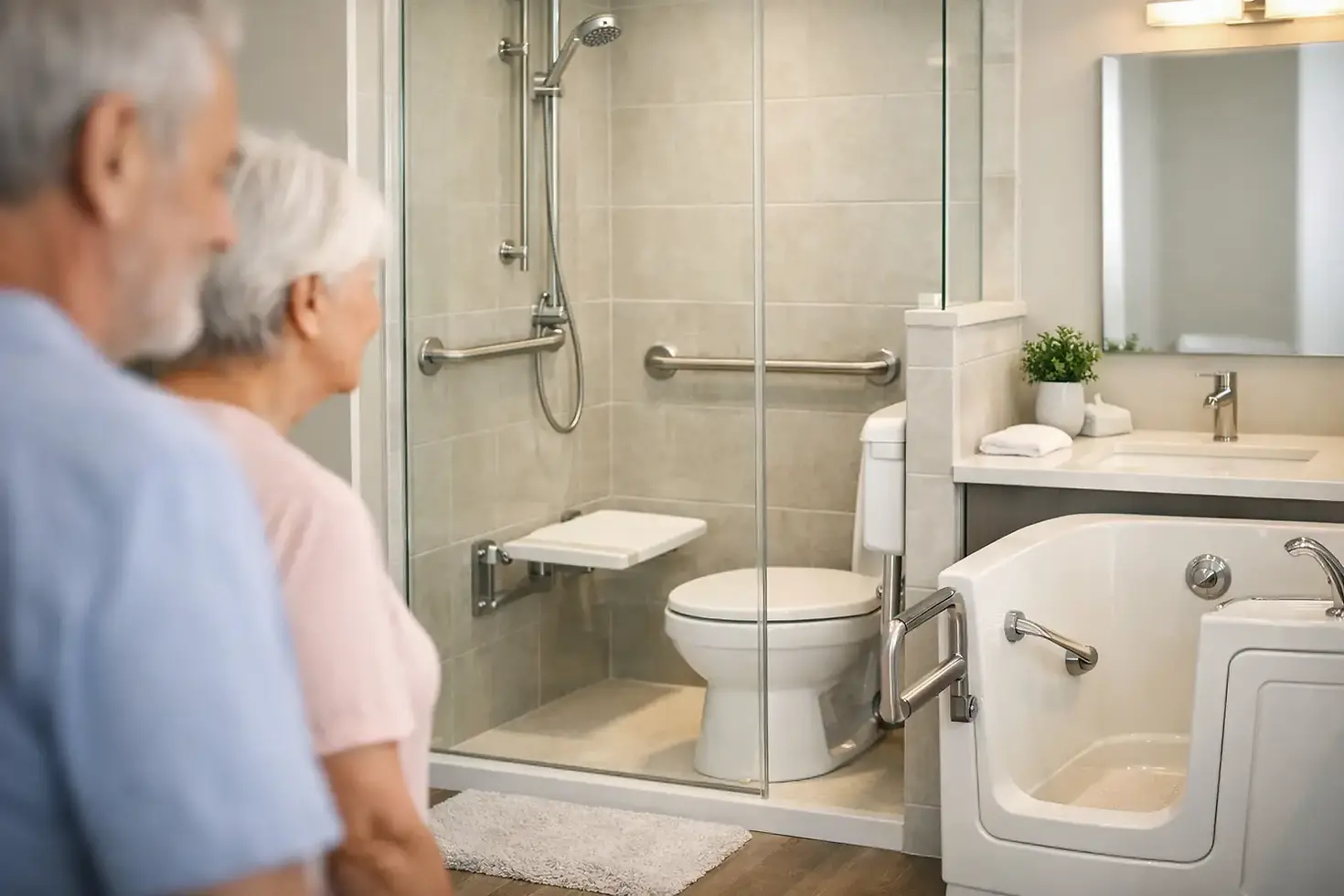
A walk-in shower is often the most practical change, especially where an existing bath is no longer being used comfortably. Removing the bath can free up valuable floor space and make the room easier to navigate. That said, it depends on the property and who will use it. In a family home with one main bathroom, keeping some form of bathing option may still matter for resale or for other household members.
The key is to avoid squeezing modern fittings into an old arrangement that no longer suits the user. A little more space around the toilet or basin can do more for day-to-day comfort than an expensive fixture in the wrong position.
Flooring and wall finishes matter more than people think
In a bathroom designed for older users, tile choice is not purely decorative. Finish, slip resistance, grout width and maintenance all affect how practical the room is.
Floor tiles need enough grip for wet conditions without becoming rough and difficult to clean. Highly polished tiles may look sharp in a showroom, but they are often the wrong choice for this kind of project. A matt or lightly textured porcelain tile is usually a safer option because it balances grip, durability and easier upkeep.
Larger tiles can help reduce grout lines, which makes cleaning simpler, but they need to be selected carefully in shower areas. If the floor has to be laid to falls, very large tiles can be less practical depending on the drainage setup and room size. Smaller formats sometimes work better on shower floors because they handle the gradient more cleanly.
Wall tiling also deserves proper thought. Fully tiled wet zones are easier to maintain and protect the structure behind them. They also create a cleaner finish than mixing too many materials in a compact room. For homeowners who want the bathroom to feel less institutional, tile colour and pattern can do a lot of work here. Warmer neutrals, soft stone effects and simple layouts usually age better than trend-led choices that date quickly.
Showers, trays and level access
For many households, the shower is the centre of the renovation. A low-profile tray can improve access immediately, but a level-access shower goes further by removing the trip edge almost entirely. That can be a strong option for seniors with reduced mobility, especially if a wheelchair or walking aid may be needed later.
There is a trade-off, though. A true level-access shower needs careful construction, waterproofing and drainage planning. In some homes, floor depth and existing pipework make it more complex. That does not mean it is the wrong choice, only that it should be assessed properly before assumptions are made.
Shower screens also need to suit the user. A wide opening or fixed panel is often more practical than a tight pivot door. If a seat is required, it needs to be positioned so that controls, shower head and storage are all within easy reach. These are small planning points, but they decide whether the shower feels usable or frustrating.
Toilets, basins and fittings
Comfort height toilets are a common improvement in bathroom renovations for seniors because they reduce the effort needed to sit down and stand up. The same logic applies to basin height and reach. A stylish basin unit is no use if it forces someone to bend awkwardly or blocks legroom where support is needed.
Tap choice is another point people underestimate. Lever taps are usually easier than traditional small-head taps, especially for anyone with reduced grip strength. Thermostatic shower controls are also worth serious consideration because they help maintain a stable temperature and reduce the chance of sudden hot water changes.
Storage should stay simple. Open access, sensible shelf heights and avoiding clutter around the basin or shower area all help keep the room safer and easier to use. Too many fitted extras in a small room can make movement worse rather than better.
Safety features should look like part of the room
No one wants a bathroom that feels like a temporary fix. Grab rails, shower seats and support points should be planned as part of the design, not treated as afterthoughts.
There are now better-looking options than the obvious white plastic fittings many people picture. Finishes can be selected to sit more naturally with the rest of the bathroom, especially when the room has been designed properly from the beginning. More importantly, rails need to be fixed into suitable support behind the wall. Good appearance means nothing if the installation is weak.
Lighting also plays a part in safety. Shadows, glare and poor mirror lighting can make the room harder to use. A well-lit bathroom with clear contrast between surfaces is usually easier to navigate, especially early in the morning or during the night.
Think ahead, even if the need feels moderate now
One of the most common mistakes is renovating only for the present moment. If mobility is already changing, it often makes sense to build in flexibility now rather than pay for another round of alterations later.
That might mean reinforcing walls where future grab rails could be added, choosing a shower area with enough space for a seat later, or leaving room around key fittings. None of this has to make the bathroom look medical. It simply means the room can adapt without being stripped out again.
For landlords and family members managing upgrades for older relatives, this approach usually makes better financial sense as well. A bathroom that lasts is better value than one that needs patching and adjustment every year.
Choosing the right contractor for the job
Senior bathroom work is not just a plumbing job and not just a tiling job. It is a fitting and finishing job where details have to work together. Falls, waterproofing, tile cuts, thresholds and fixture positions all need to be handled with care.
That is why workmanship matters. A neat finish is part of the result, but so is knowing how surfaces behave in wet conditions and how to set out a bathroom so it functions properly. In London and the surrounding areas, many homeowners look for specialists rather than general trades for exactly this reason - the quality of installation affects both safety and lifespan.
If you are planning a bathroom for an older family member or for your own long-term use, be clear about how the room needs to perform day to day. The right renovation is not the one with the most features. It is the one that feels straightforward every time the door closes behind you.



Comments