
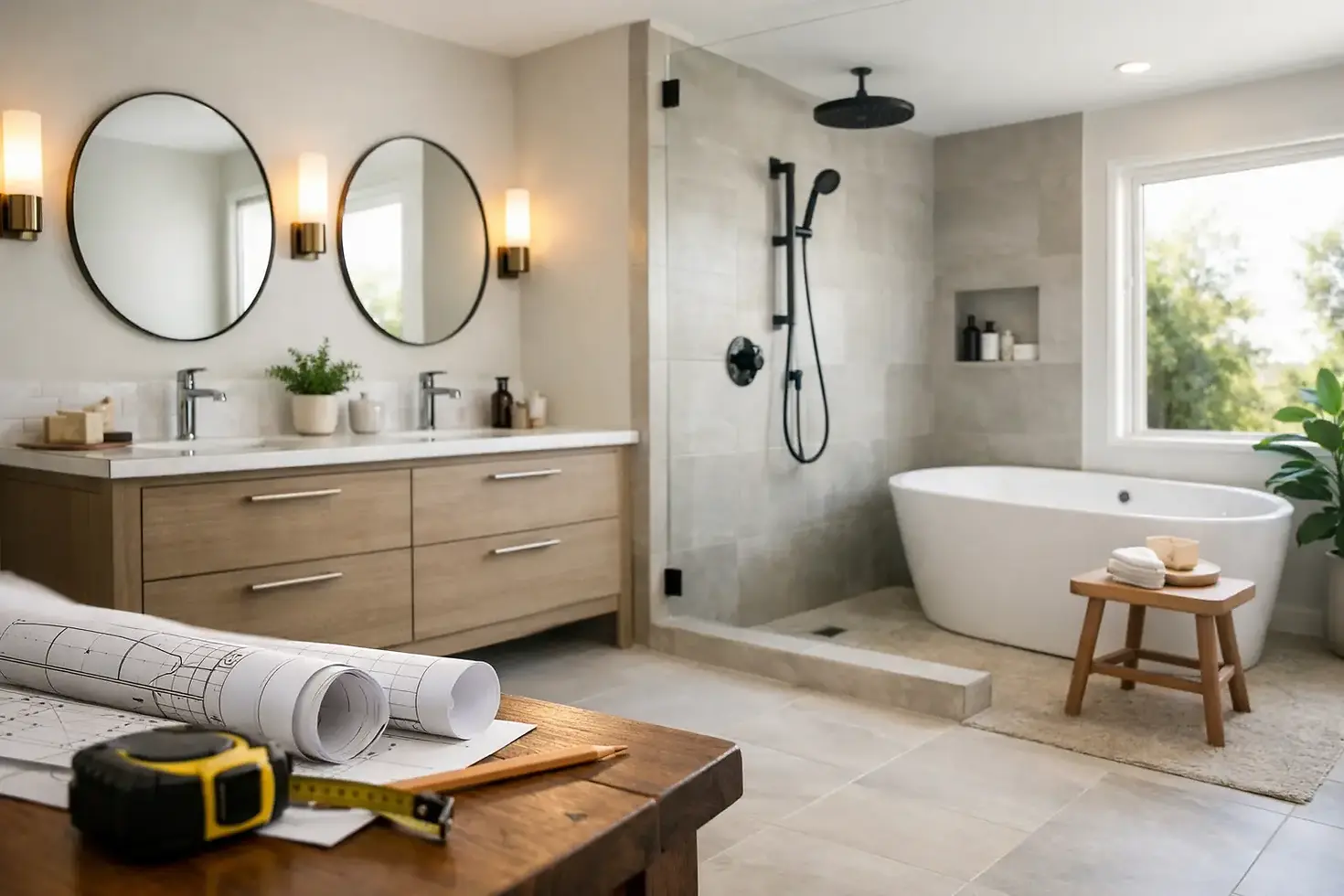
12 Bathroom Renovation Ideas That Last

If your bathroom still works but feels dated, poorly laid out or harder to clean than it should be, the right bathroom renovation ideas can fix more than appearance. A good renovation should improve daily use, make the room easier to maintain and give you a finish that still looks right years later, not just in the first month after installation.
In London homes, bathrooms vary widely. Some are compact and need every millimetre used properly. Others have enough space for a walk-in shower, feature tiling or a stronger design statement. In both cases, the best results usually come from practical choices first, then visual ones. Tiles, layout, drainage, lighting and storage all need to work together.
Bathroom renovation ideas that improve the layout
A bathroom can look expensive and still feel awkward if the layout is wrong. One of the most effective upgrades is replacing a bulky enclosure or unused bath with a properly planned shower area. In smaller bathrooms, that often creates better movement through the room and frees wall space for storage or a wider basin.
Wall-hung fittings are another strong option where space is tight. A wall-hung WC and vanity unit expose more floor area, which makes the room feel larger and simplifies cleaning. This only works well if the wall construction and plumbing allow for it, so it needs checking early rather than being treated as a last-minute style choice.
If you do have room for both a bath and shower, it is worth deciding which one will actually be used. Some households want a bath for children or resale appeal. Others never use it and would benefit far more from a large walk-in shower with a recessed shelf and fixed glass screen. There is no single right answer. It depends on the property, the household and how long you plan to stay there.
Use tiles as part of the design, not just the finish
In bathroom work, tile choice does a lot of the heavy lifting. It affects the look of the room, but also slip resistance, cleaning, grout maintenance and long-term durability. This is where many renovations either come together properly or start to feel compromised.
Large-format porcelain tiles are a popular choice for modern bathrooms because they reduce grout lines and give a cleaner visual finish. They work especially well on walls in shower areas and across bathroom floors where you want a more continuous look. The trade-off is that larger tiles require flatter surfaces and more precise setting out. If the preparation is poor, the finished result shows it quickly.
Patterned tiles can work well too, especially on a floor or feature wall, but they need balance. In a compact bathroom, a busy tile on every surface can make the room feel crowded. Often the better route is to keep the main field tile simple and use pattern in one controlled area, such as a splashback, shower niche or entrance floor.
Natural stone gives a high-end finish, but it is not always the most practical option in every bathroom. It usually needs more maintenance than porcelain and can be less forgiving in busy family spaces. If you want the stone look without the upkeep, porcelain alternatives are often the smarter specification.
Build storage into the renovation
Storage is usually treated as furniture shopping at the end of the project, when in reality it should be designed from the start. A bathroom with nowhere to put toiletries, cleaning products and spare towels will always feel untidy, no matter how well the tiling has been done.
Recessed niches are one of the most useful additions in shower areas. They keep bottles off the tray or floor and look much neater than aftermarket caddies. The key is getting the size, position and tile setting out right so the niche looks built in rather than forced into the wall.
Vanity drawers generally offer better use of space than cupboards because you can access the full depth more easily. Mirrored cabinets are another practical choice, especially in smaller bathrooms where every wall needs to earn its place. If your room is very tight, even a ledge built into a false wall can make a difference.
Lighting matters more than most people expect
Poor lighting can flatten the whole room, even when the finishes are good. A single ceiling light rarely gives enough coverage for a bathroom that needs to work for shaving, make-up, cleaning and general use.
Layered lighting tends to perform better. That might mean downlights for overall illumination, mirror lighting for task use and softer accent lighting in a niche or under a vanity unit. The aim is not to overcomplicate the scheme. It is to avoid dark corners, harsh shadows and a room that feels cold.
Warm white lighting is often the safer option for residential bathrooms because it keeps tile colours looking more natural. Very cool lighting can make some finishes feel clinical. That said, it depends on the tile colour, natural light levels and the style you are aiming for.
Make the shower area work harder
Many of the strongest bathroom renovation ideas centre on the shower because it is usually the most used part of the room. A well-finished shower area should be comfortable to use, easy to clean and detailed correctly behind the surface.
A low-profile tray gives a cleaner transition and suits most modern bathrooms. In some properties, a fully tanked wet room floor is the better option, particularly where step-free access is important. Wet rooms can look excellent, but they are not automatically the best solution for every home. The falls need to be formed properly, the waterproofing has to be exact and the room layout needs to support splash control.
Frameless or minimal glass screens help keep the room visually open. They also show off the tiling more clearly. The downside is that glass always needs regular cleaning, especially in hard water areas, so it is worth being realistic about maintenance.
Choose finishes that still look right in five years
Trends move quickly. Renovation work should not. If you are investing properly in a bathroom, the goal should be a finish that still looks current and well executed after years of use.
Neutral base tiles are usually a stronger long-term decision than very specific trend colours across every surface. That does not mean the room has to feel plain. Texture, format and pattern can add enough character without making the bathroom date too quickly. Matt and satin finishes are often easier to live with than highly polished ones, particularly on floors and in family bathrooms.
Brassware is another area where restraint helps. Black fittings can look sharp, but they tend to show water marks more readily. Brushed finishes often hide daily wear better than polished chrome, depending on the product quality. Cheap fittings in fashionable finishes are rarely good value if they need replacing early.
Think about cleaning before the room is finished
A bathroom might photograph well on completion and still be frustrating to maintain. This is where practical detailing pays off.
Fewer grout lines generally mean less cleaning. Wall-hung units make floor cleaning easier. Large mirrors can reduce visual clutter, but if they are placed badly they will show every splash. Even the choice between a countertop basin and an integrated basin comes down partly to cleaning habits. One may look more bespoke, but the other may be easier to live with.
Grout colour also matters. Very light grout can look crisp, though it may show discolouration more quickly in high-use areas. Very dark grout can create strong contrast and sometimes highlights unevenness. Mid-tone grout often gives a more forgiving finish, especially on floors.
Match the renovation to the type of property
The best bathroom renovation ideas are not the same for every home. A rental property usually calls for durable, straightforward materials that are easy to maintain and replace if needed. A family home may need stronger storage, a bath and slip-resistant floor tiles. A premium en suite might justify more feature tiling, larger formats and built-in details.
Older London properties can also bring practical limits. Floors may need levelling, walls may be out, and plumbing positions may restrict what can be moved without adding cost. This is why experienced installation matters. A good finish depends on what sits behind the tiles as much as the tiles themselves.
For homeowners who want a bathroom that looks sharp and performs properly, the right approach is usually simple - get the layout right, choose materials that suit the room, and do not compromise on preparation or fitting. At GMSUK TILING EXPERT LTD, that is where the real value sits. A bathroom should not just look finished. It should feel properly built every time you use it.


Comments